Assi

ASSI Study Groups

With Fostering collaboration and pooling expertise, a study group can contribute significantly to the field of spine surgery. Successful study groups thrive on active participation, open communication, and a shared commitment to advancing spinal care.

Spine Research

Identification of Common Interests

Focused collaboration across key domains in spine surgery.

Pediatric Deformities

Advancing care and outcomes for pediatric spinal deformities.

Enabling Technologies

Exploring innovative technologies shaping modern spine surgery.

Infections

Improving prevention, diagnosis, and management of spinal infections.
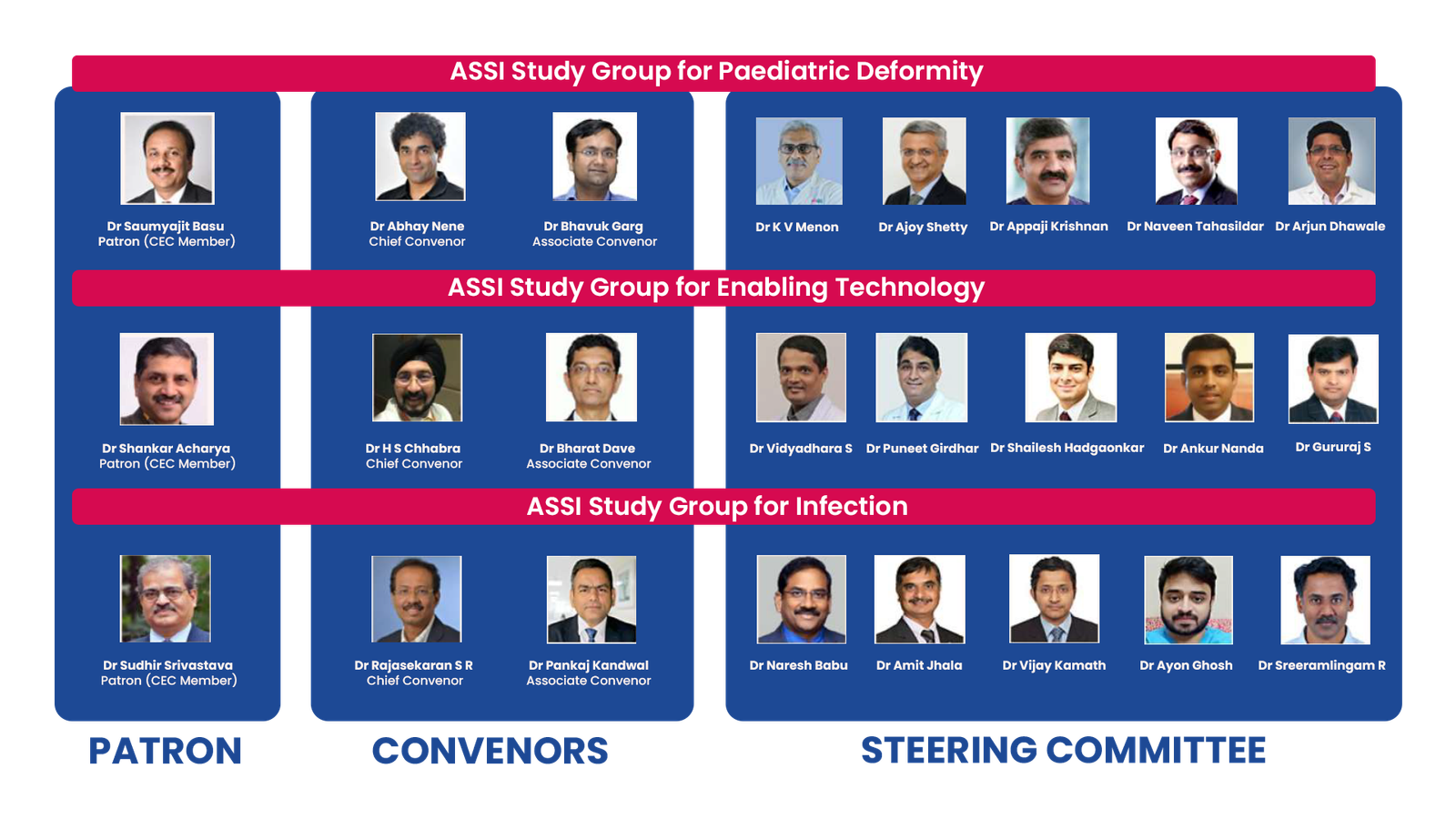
ASSI Study Groups

Leadership

Formalization of the Group

  • Define goals, objectives, and scope.
  • Create a name for the group that reflects its purpose, e.g. ASSISGET for Enabling Technologies and ASSISGIN for Infection and ASSISGPD for Pediatric Deformities.
  • Appoint leadership roles (e.g., Advisor, Chair, Co-Chair, Secretary) to manage group activities. Invite spine surgeons from the society to join the study group- Encourage active participation and commitment.

Educational Initiatives & Regular Meetings

Promoting continuous learning, collaboration, and active member participation.

Structured Educational Sessions

Organize educational sessions within the study group by inviting guest speakers, sharing learning resources, and discussing emerging techniques in spine surgery.

Regular ASSI Meetings

Schedule regular meetings during ASSI events (virtual or in-person) to discuss research progress, share findings, and strengthen collaborative efforts.

Interactive Academic Activities

Host webinars, journal clubs, and case discussions, with rotating facilitators to encourage inclusive participation from all members.

Research Projects and Publications

  • Identify research topics or questions relevant to the group as a part of ASSI-directed research.
  • Collaborate on multicenter prospective studies. Collect data, analyze results, and publish findings. Create a platform for data sharing and collaboration. Use secure databases or platforms to store and exchange research data.
  • Collaborate on manuscripts, systematic reviews, and meta-analyses. Aim for high-quality research publications.
Research

Advocacy and Networking Opportunities

Building strong professional networks and representing ASSI research globally.

Facilitate networking among study group members.

Attending conferences together and present group research.